

- Start playing the video
- Click CC at bottom right
- Click the gear icon to its right
- Click Subtitles/CC
- Click Auto-translate
- Select language you want
Designing Exclusion: How Defensive Urbanism Shapes Montreal
Public spaces are meant to be open and accessible, but in many cities, including Montreal, elements of exclusion are baked into the design. In this interview, Cara Chellew, a PhD candidate in Urban Planning, Policy, and Design at McGill University and founder of DefensiveTO, unpacks how urban design is increasingly used to control public behaviour—often at the expense of the most vulnerable.
Defensive Urbanism shows up in everyday infrastructure: benches with armrests that prevent lying down, spikes on ledges to deter skateboarders, and underpasses lit with harsh strobe lights or blasted with loud music to discourage loitering. While these measures are typically framed as efforts to maintain order, they disproportionately impact marginalized communities. The lack of public washrooms, shaded rest areas, and seating doesn’t just prevent so-called “undesirable” behaviour—it makes it harder for everyone to navigate the city: seniors, people with disabilities, parents with small children, and those living with illness.
Chellew has spent years studying how cities deploy these tactics—sometimes subtly, overtly—to regulate who gets to use public space. She argues that exclusionary design overwhelmingly targets those most visible in public spaces, regardless of whether they’re doing anything illegal.
“These spaces are now being securitized to keep out people who are seen to devalue the space or who are using it in an unintended way,” she explains. “The biggest target of defensive or hostile design is visibly unhoused people. Maybe they’re not even unhoused—but they’re visible. Maybe they’re drinking or panhandling. These are really minor acts, often not even crimes, but they’re treated as ‘incivilities.’ That’s a trend I’ve been researching and observing in Montreal, Toronto, and beyond.”
She also points to a more insidious form of Defensive Urbanism: omission. Rather than installing obvious deterrents like spikes or dividers, cities increasingly avoid including features that once made public spaces welcoming to all—like benches, washrooms, or sheltered areas. These amenities, once considered essential for supporting life beyond the private home, are disappearing, making the urban environment less comfortable and less accessible.
As awareness of Defensive Urbanism grows, so does resistance to it. Chellew also discusses the historical roots of exclusionary design, the role of policymakers and private property owners in shaping public space, and the complex challenges of creating truly inclusive cities
Add new comment

Recent Media

Montreal’s Defund Fest: honouring lives, building community
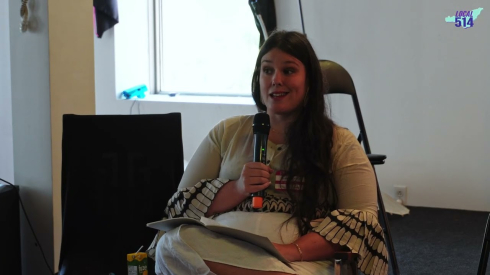
Montreal's Defund Fest: rethinking sex work and repression
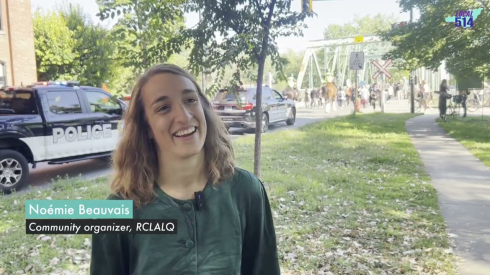
Montreal tenants push back: rent reform under fire

We encourage comments which further the dialogue about the stories we post. Comments will be moderated and posted if they follow these guidelines:
The Community Media Portal reserves the right to reject any comments which do not adhere to these minimum standards.