


- Start playing the video
- Click CC at bottom right
- Click the gear icon to its right
- Click Subtitles/CC
- Click Auto-translate
- Select language you want
Supporting Deaf and Hard of Hearing (DHH) Students in Western Manitoba (Part 2)
Supporting Deaf and Hard of Hearing Students Across Manitoba
NACTV recently sat down with two dedicated professionals working to support Deaf and Hard of Hearing (DHH) students and educators throughout Manitoba. Karen Graham and Meaghan Gessner bring decades of experience and advocacy to their roles, helping to bridge communication and educational gaps in both urban and rural school divisions.
Meet the Experts
Karen Graham, a Teacher Consultant for Deaf and Hard of Hearing Students based in Brandon, has nearly 37 years of experience in Deaf education. She works alongside classroom teachers, resource staff, and educational assistants (EAs) in Brandon and eight surrounding school divisions, offering resources, strategies, and hands-on support to help students with hearing loss thrive in mainstream classrooms.
Meaghan Gessner, an Educational Interpreting Consultant, has been a certified interpreter for 19 years and has spent the last eight in her current consulting role. Based in Winnipeg, she travels across the province—north, south, east, and west—to support students who use American Sign Language (ASL). Her responsibilities include mentoring interpreters and signing EAs, delivering professional development, and advising school divisions on recruitment and interpreter screening.
Existing Supports for DHH Students
Karen and Meaghan are part of a provincial team dedicated to supporting K–12 students with permanent hearing loss. This team includes five certified Teachers of the Deaf and Hard of Hearing, an ASL Consultant, and a Speech-Language Pathologist. They work collaboratively with preschool services, other DHH professionals, and school staff to ensure seamless support as students move through the education system.
Meaghan also helps schools with interpreter hiring, conducting skill assessments, and training staff to understand the role interpreters play in classroom learning.
Interpreter Shortages in Rural Areas
One of the most pressing challenges in Manitoba—particularly outside Winnipeg—is the lack of trained interpreters. Professional interpreters typically complete a four-year post-secondary program, such as the joint offering from Red River College and the University of Manitoba. In contrast, signing EAs may only have a few ASL courses under their belt and often lack the fluency required for effective classroom interpreting.
“In my 25 years working in rural Westman, I only encountered one trained interpreter,” Karen shared. “It’s hard to attract them to rural areas—it can be isolating, and many school divisions don’t even realize they should be posting for that role.”
Meaghan agreed: “Some divisions don’t understand the difference between a trained interpreter and a signing EA, so they either mispost the job or don’t post it at all.”
Training and Support for Signing EAs
Professional development for signing EAs can be expensive and time-intensive. While some school divisions will cover ASL course fees (such as those from Vista), others don’t offer that support. Continued learning—through immersion programs, online resources, and mentorship from the Deaf community—is key to developing strong ASL skills.
“To really grow in ASL, EAs need consistent exposure, not just coursework,” Karen noted. “That’s a big challenge in rural areas where access is limited.”
The Role of Technology
Technology is playing a growing role in supporting DHH students. Advances in hearing aids, speech-to-text apps, and digital note-taking tools are making a difference. But in rural and northern regions, limited Wi-Fi and school firewalls often restrict access to online resources like ASL videos on YouTube.
“Urban areas have way more support,” Karen said. “Sometimes just accessing the tools students need can be a hurdle because of connectivity issues or blocked content.”
Best Practices and the Path Forward
When it comes to successful models, Karen points to Winnipeg School Division’s approach: students from across the city are bused into specialized programs designed for DHH learners, staffed with trained interpreters and skilled EAs. Recognizing the value of these roles and structuring programs accordingly sets a strong example for other divisions.
While progress is being made, much more is needed to ensure equity in education for Deaf and Hard of Hearing students across Manitoba. Greater awareness, increased funding, and systemic changes in how support roles are hired and trained will be crucial—especially in rural communities.
Add new comment

As Neepawa and area’s local access television station, NACTV has been serving the community since 1977. The station is a community-owned not-for-profit organisation that broadcasts 24 hours a day and reaches homes throughout Manitoba and Canada on Bell ExpressVu 592, MTS Channel 30/1030, and WCG 117 as well as streaming online at nactv.tv.
NACTV’s content is primarily filmed and produced by local volunteers and focuses on issues, activities, achievements, sports, and news by, about, and of interest to our community.
Neepawa is located in western Manitoba, about two hours west of Winnipeg and 45 minutes southeast of Riding Mountain National Park.
Recent Media
Road Issues Continue to Plague RM of Rosedale
New Events Centre Could Put Multiple Facilities Under One Roof
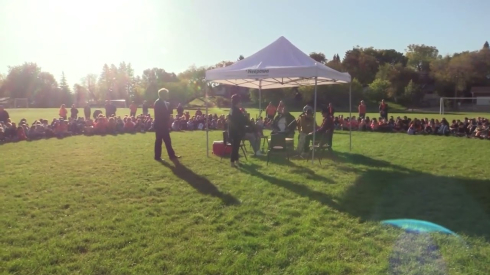
Celebrating Indigenous Culture Day 2025 in Neepawa






We encourage comments which further the dialogue about the stories we post. Comments will be moderated and posted if they follow these guidelines:
The Community Media Portal reserves the right to reject any comments which do not adhere to these minimum standards.